Code: Realize ~Guardian of Rebirth~ Review

92344e13-06e3-434c-84e8-fb008ba6a2ea


RELEASE DATE: 2014
PUBLISHER: Idea Factory & Aksys Games
PLATFORMS AVAILABLE: PS Vita (Japanese & English)
PURCHASE LINK: Code: Realize Guardian of Rebirth – PlayStation Vita [PHYSICAL]

I remember playing this game initially when it was released and localised in 2015 by Aksys Games in English. Recently, I decided to replay the game out of nostalgia as I haven’t touched the game since clocking it two years ago. Besides, I might as well write a review on one of my all-time favourite otome games, am I right? I purchased a PS Vita initially to play Amnesia: Memories that was released a month prior. To my surprise and delight, this title was released soon after.

What initially caught my attention was the gorgeous art, impressive soundtrack, strong voice cast line up and the character designs. Not to mention I am a sucker for historical-based Visual Novels, since it gives a more three-dimensional take on the storyline and feels more authentic to read as a reader. It’s always interesting to see how writers incorporate real life events and places to further fuel their own writing.

Needless to say, I felt this was undoubtedly the best otome game released in english for 2015. At the price of $29.99 USD, it is well worth the purchase and I highly recommend to all otome game lovers to play.

Storyline ★★★★★
5980051f-b7f7-43c9-aefd-ed07c4e79259.png

-The Story-

Restricted to an abandoned mansion on the outskirts of London in fulfillment of a promise to her father, lonely Cardia lives day to day isolated from the world. Her body carries a deadly poison that rots or melts anything her skin touches, prompting the locals to call her a “monster.” Her last conversation with her father two years ago, telling her to stay out of sight and never fall in love, is the furthest back she can remember. One day, her quiet solitude is interrupted as the Royal Guards break in to capture her. It is then that Cardia meets Arsène Lupin, a chivalrous thief, who helps her escape the soldiers’ clutches. She soon finds herself on a journey with Lupin to locate her father, who holds the answers to her mysterious condition. The two are soon joined by four more interesting and handsome gentlemen…

(Aksys Games Website)

The story is based in 19th Century London, Britain during the technological age of revolution. It heavily uses the genre of steampunk and many of the characters are based on famous historical figures or fiction of the era. Isaac Beckford, the protagonist’s father is considered the equivalent of a “modern prometheus”. He is the main forerunner behind Britain’s staggering technological advancement for its time and fortified defence famously known as Steel London.

However, he has since disappeared without a trace in the peak of his career and brilliance to the shock of the world. It is the search for his whereabouts that joins all the characters by fate in meeting one another, and they become a team in order to further their own personal goals. Cardia (the protagonist) decides to accompany them on a journey of self-discovery, seeking the answers to her own past, origin and cure for her condition to fulfil her desire to touch another human being.

The story premise immediately draws the reader in with its interesting concept and twist on real world history. It is executed excellently with good story pacing, and every route is wrapped up nicely. The reader isn’t left dissatisfied or with questions unanswered and the routes go into incredible detail about the character’s struggles, past, origin, and reasons for searching for Isaac Beckford. One of the greatest points about Code: Realize is that none of the routes felt lacking in content and depth. Usually many Visual Novels struggle with consistency and it is obvious in the writing that some routes are written better than others. This was not the case for this game.

Every route played a crucial factor in the overarching plot, each connecting to one another beautifully in the grand scheme of painting the picture for the story. Every route essentially was a different perspective and piece of the overall plot. When the dots all lined up in the end, I was left with a feeling of awe and satisfaction at how well planned out the whole storyline was.

The writing and translation was decent, with very little grammatical errors throughout. I noticed only a handful of typos over the course of the game, which could have been corrected with more thorough proofreading. The game is quite lengthy, and would take approximately 30-50hrs to complete. The common route spans from Chapter 1-8 of the game, and takes around 5-6 hrs to finish. From Chapter 9-13 is the character route of the chosen bachelor that you selected, which takes around 5-10 hrs to finish depending on your read speed.

The game covers a lot of content and is very text heavy. If you’re not a fan of content-heavy games with slow developing storylines, this game can be quite the lengthy read and a struggle to finish. It is also an otome game so the romance aspect does play a significant role in furthering the plot. Overall, there is very little I can fault about the story and writing itself. I thoroughly enjoyed reading and playing the game, and it definitely left a strong impression on me.

Character Development ★★★★

WARNING! SPOILERS AHEAD! READ AT YOUR OWN DISCRETION! 
7c273a53-c6be-4a0d-a6c4-cf8a96fe3000.png

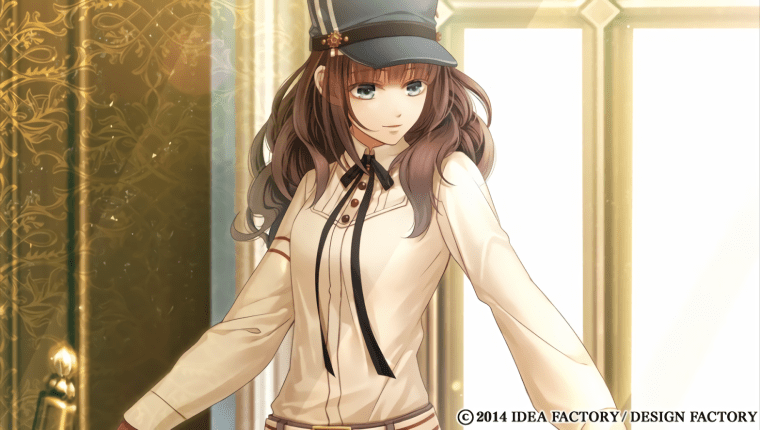
CARDIA BECKFORD: One of the strongest points of the game is the writing for the heroine herself, Cardia Beckford. Playing as Cardia was an incredibly refreshing and rewarding experience, as she develops fantastically as a character over the course of the game. She begins as a doll-like girl with no will to live, unwilling to change and without a single desire or purpose other than to wait for the return of her father. Throughout her journey with the bachelors she transforms into someone who deeply cares for her friends and others around her, and does not hesitate to protect what she holds dear.

She shows the capacity for human thoughts and emotions, and a moral compass that distinguishes her from being a “monster”. Cardia constantly tries her best not to hold her friends back and excels in the skills that they’ve taught her such as Lupin’s escape tactics, Van Helsing’s combat lessons and techniques, and Viktor’s use and understanding of chemical properties. Unlike many otome game heroines who fulfil the damsel-in-distress role, Cardia has shown time and time again that she can very well hold her own ground in a fair fight—even against the elite soldiers, Twilight.

She has escaped and overcome many situations that would’ve normally been deemed hopeless, through sheer willpower and wit. It is also understandable as to how she ends up falling for each of the bachelors and doesn’t fall for them initially at first sight. There is build up and development with every character, as she slowly opens her heart to them about her deepest fears and past.

The game requires all 4 bachelor routes to be completed (Van Helsing, Saint-Germain, Viktor Frankenstein and Impey Barbicane) before it unlocks Lupin’s Route (The True Ending). I personally recommend playing them in the above order due to the later routes revealing more information about the true ending. However, it’s not extremely important to play in that specific order and you can easily choose whomever you would like to play first.

155b4a77-e7b1-4e1f-9f15-9c1ec629e6b5.png

ABRAHAM VAN HELSING: Van Helsing is the infamous Vampire Hunter, who eradicated the vampires and their king during the Vampire War. He initially opens fire on the group when they are attending a fair and demands that Cardia accompany him as she may be the key to finding the man he must kill. Van Helsing reluctantly joins the group after seeing their display of skill and that their goals all essentially align to one man—Isaac Beckford.

He is cold, callous, and remains distant from the rest of the group—having only a single-minded focus on killing Finis, the source of his life’s despair and misery. Van Helsing is willing to throw away everything, so long as his role as an avenger comes to an end, and agrees to die at the hands of Delacroix II to atone for his sins.

I thoroughly enjoyed Van Helsing’s route, as it was very emotionally vexing and well written. Seeing the transition from a cold-blooded killer into a man conflicted by his sense of duty and the foreign emotions of love truly played on my heartstrings. The pivotal moment when he confesses his longing for the heroine and his frustrations at her recklessness precisely because he loves her was so wonderfully written. His voice actor (Suwabe Junichi) did a fantastic job at conveying his pain, despair and love—the raw emotion was evident in every word punctuated.

I felt that he had significant character development throughout the story and a great relationship dynamic with Cardia. Every moment between the two was electrifying, as Cardia consistently displays the fruits of his efforts in honing her admirable combat skills.

I felt their mutual respect and trust with one another’s lives formed the crux of their relationship and it inevitably led to them falling in love. The twist of his route was all too heart-wrenching and completely justified his inner torment and turmoil. I loved the pacing, development and his good ending CG with Cardia was just all too cute.

ff9e9dd9-5a6b-4deb-bdd2-a32b4d87b05b.png

SAINT-GERMAIN: The most mysterious out of all the characters, not much is known about the whimsical Count other than his immense generosity in allowing the cast to stay at his mansion and entertaining their grand schemes in searching for Isaac Beckford. Originating in France, Saint-Germain is always calm, well-mannered and eloquent—the picture perfect definition of a gentleman.

In spite of his distaste for violence, all the characters have expressed that he is a force to be reckoned with and encompasses immense skill in combat—demonstrating on multiple occasions that he even exceeds Van Helsing in strength. Saint-Germain in my opinion had by far the best storyline out of all the bachelors in the sheer complexity of the plot and how well the pieces all came together in the end.

I don’t think any reader would have anticipated that Saint-Germain is in fact hundreds of years old, and an Apostle of Idea—The Guides of History throughout all of mankind. It just all suddenly clicked as to how they were able to evade detection for so long in the Count’s mansion, his combat skill through centuries of honing, immense world knowledge and how all the characters capable of altering history came to meet at his intervention behind the scenes.

I really liked the concept of the Apostles due to the strong religious allusions and historical references used to strengthen the storyline itself. It addresses yet another dimension of Cardia’s character and existence—the morality of mankind obtaining infinite power and trespassing on the realm of God in the creation of a human being.

Power given to human hands throughout history has inevitably led to death and destruction, a path that bars mankind from returning to Eternal Paradise (The Garden of Eden)—a goal that Omnibus (Eve), the Leader of the Apostles has dedicated her whole life to. Through consuming the forbidden fruit, Omnibus has the power to predict human disaster, and steer mankind onto the path of salvation. Cardia’s very own existence as a result, is undoubtedly considered sin in God’s eyes—a poor imitation at creating a human being, a doll unable to touch or love another person without planting the seeds of despair.

And yet, this very imitation has shown the capacity to love and care for another, not hesitating to place her life on the line to save someone else. She laughs, cries and smiles just like any other human being—so where is the line that distinguishes man from beast?It is no wonder that Saint-Germain becomes immensely conflicted in his judgement, as he is unable to come to a decision regarding her existence. For the first time in a millennia, his cold heart has been thawed and moved by a girl fighting against fate in her search for meaning.

As a warning, his route is significantly darker than the other bachelors and can be considered disturbing to many. He displays ‘yandere-like’ tendencies such as kidnapping the heroine, attempting to strangle her, and she does die at his hands brutally in several of the bad ends. It is understandable however, as his role in history does not allow him to disobey orders. The only order he disobeyed led to an incredibly traumatic past that wiped out a large portion of humanity, leaving his hands permanently bloodstained. Cardia continuing to live would bring about a calamity far greater than any in the past that humankind has committed.

The raw undiluted passion that the Count showed when single-handedly going against the 12 Apostles, and begging Omnibus to spare Cardia’s life touched me. It was completely unlike his character, and truly demonstrated how much he loved her and how important her existence was to him. Saint-Germain’s route is crucial to Cardia, since it further develops her as a character and addresses her existentialist existence. I was a little disappointed at his ending, since I felt that the happiness gifted to them could only be temporary and didn’t truly resolve Cardia’s underlying problems.

4a6889a9-c4cc-4172-81ab-e1f38223e72e.png

VIKTOR FRANKENSTEIN: A famous alchemist in London and part of the prestigious Royal Alchemist Society, well-respected and renowned for his scientific discoveries. Cardia encounters Viktor when he assists her escape from some thugs on her first day in London, and offers the group his cooperation for their quests regarding Isaac Beckford in return for safety from the government.

He has been branded a wanted criminal and terrorist for treason, although it is unknown to the group the true nature of these accusations. Always kind-hearted, soft-spoken and gentle, he primarily serves as the group’s medic and makes up for his physical shortcomings through his use and knowledge of chemically-filled test tubes for both offence and defence.

It was quite amusing for a time of Cardia’s dilemma as Viktor potentially being her father, obviously alluding to the original tale of Frankenstein creating a monster whom he then abandoned. Initially I didn’t expect too much coming into Viktor’s route as his character isn’t usually my type, but his route was undoubtedly very sweet.

His route is refreshing in comparison to the first two, who are completely and utterly at the mercy of their past. Although he does have a traumatic past of his own, the overall mood and tone of the story is significantly more light-hearted. I particularly enjoyed his moments of shyness and consideration for Cardia that were vacant from the other two, and the fumbling of two people in love for the first time.

I enjoyed his route particularly due to his hand in creating the element ‘Zicterium’, the pre-cursor to the Philosopher’s Stone and his contribution to the heroine’s past was more significant than any of us would expect. I felt he developed wonderfully as a character because it is through his meeting and interactions with the heroine that he is finally able to confront the demons of his past, and look forward to creating a better future. It is Cardia’s courage and headstrong personality that enables Viktor to find the strength and determination to atone for his actions.

What I also liked was that it explored Queen Victoria’s character and her past, giving greater insight into a very interesting character in her own right. Viktor’s route paints her in her darkest hour as a ruthless, tyrant-like ruler who would sacrifice a whole city of civilians for the benefit of Great Britain—essentially the end justifying the means.

By the end of his route however, we realise that she is in fact a genuinely kind and benevolent Queen, giving up her own morality and sense of self for the sake of her people. Everything she has done has always been for the benefit of her own country, no matter how many pieces of herself she would lose in the process. I felt the scene where Leonhardt for the first time in his life disobeyed the Queen’s orders in response to Viktor’s brave actions of standing up to him and refusing to employ Victoria’s tactics, was a true demonstration of both the character’s development over the story.

468f46f8-1d4d-4979-b134-a8da659c2570.png

IMPEY BARBICANE: A self-proclaimed genius engineer who partners up with Arsène Lupin from the beginning of the game to rescue Cardia from her home in Wales. The ‘comic-relief’ character out of all the bachelors, Impey is an incredibly cheerful and energetic personality—much to the ire of the others and consistently used as the butt of their jokes.

Despite their constant insults at his lack of trustworthiness and questionable morals when it comes to women, they deeply respect his abilities as both a cook and an engineer—fully relying on him and trusting in his skill to get them out of tricky situations, which Impey always delivers. He is the only character who falls in love with Cardia at first sight, and expresses disappointment in all the routes when she ends up falling in love with another bachelor; although he always wishes for her happiness in the end.

I felt Impey although an enjoyable route to read, was a lot weaker than the others due to the fact that he had very little character development over the course of the story. He is more or less the same from beginning to end and doesn’t differ much from what we see in the other storylines—essentially what you see is what you get.

An interesting revelation about him was his origins as a vampire, which explains his incredible strength and durability in combat. However, this was only mentioned in his route and not delved upon fully to my disappointment. I felt the nature of his origins could’ve been expanded on and his past felt lacking in comparison to the others. His route is the most light-hearted out of the bunch and not as heavy of a read, which was a nice contrast.

His route delves into the character of Nemo, another genius mad-scientist who claims that both Viktor and Impey are his greatest rivals. This is important as Nemo is actually a significant character in the grand overarching plot, due to his contributions to Twilight—the organisation seeking for the capture of Cardia. Impey by far had the best CGs in the game with the heroine, almost unfairly so in comparison to the other bachelors. Overall, I still really liked Impey as a character due to the dynamic he added to the group and the balance he brought to everyone’s more serious personalities.
88bf2d72-70d6-468e-822a-80ac97681dad.png

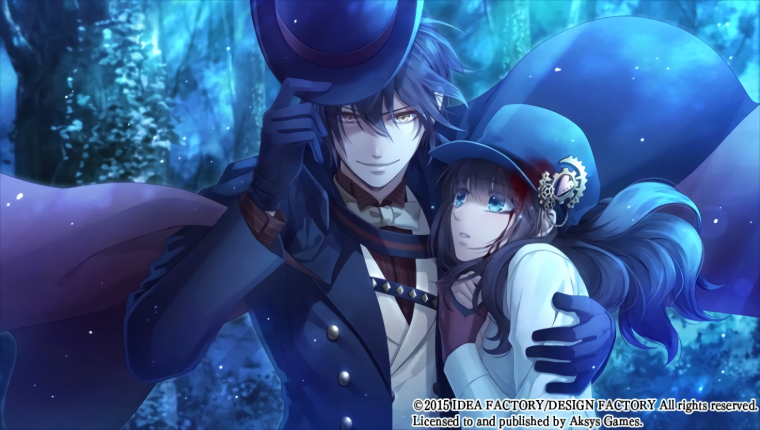
ARSÈNE LUPIN: The true ending only unlockable upon the completion of every other route, and as a result the most controversial in terms of audience reception. A world renowned ‘gentlemen-thief’ who has stolen from the most elite-organisations whether it be money, top-secret information or treasures that have never been revealed to the public eye. A modern-day Robin Hood, he steals only from the rich and gives back to the poor—a rather warped sense of self-justice that he has instilled upon himself.

Lupin is responsible for planning the heist to rescue Cardia at the beginning of the game and pledges to her that he can steal anything in the world—including women’s hearts. He makes a promise to grant her wish of being able to touch another human being, and ridding her body of the poison that permeates it. Lupin has a strong distaste for violence as he finds the behaviour ungentlemanly, and as a result all his skills lie in the art of deception and escape.

I felt that although his route was good, it didn’t truly live up to the hype and build up it had from playing all the other routes. A consistent theme throughout the game is that all the bachelors mention that they aren’t right for the heroine, and choosing someone like Lupin would truly ensure her salvation and happiness. They all emphasise that Lupin is the only one who can cure her and grant Cardia the wish that she is seeking.

As a result, the bulk of Lupin’s story is dedicated to revealing and answering all the questions hinted at in the previous routes. Although his past is touched upon as to how he became a gentleman thief and acquired his skills, it was nowhere near as impactful or in-depth as the others. I felt his reasoning for saving the heroine and life purpose was quite weak overall and didn’t leave a lasting impression.

All of his route essentially revolved around Cardia, her past and how to rid her of the poison without much focus on Lupin at all—despite it being his route. He doesn’t develop much as a character either, despite having such significant roles in every single other bachelor route. He is the same from beginning to end, and when a character is too perfect in every way then that is also a flaw in the writing.

What I do commend is that the route does wrap up the overarching story nicely and the questions that culminated throughout the plot were all answered in one grand sweep. It is the only route where Isaac Beckford finally makes his appearance and delves into his purpose for creating the cursed children, as well as his reasoning for it all.

Lupin’s route is the most romantic and has the most ‘canon ending’ out of all the bachelors. As he is the true ending, he naturally has all the best moments in the game as a character. He truly plays the ‘golden-hearted hero with an unparalleled sense of justice that rescues the princess time and time again’ role perfectly.

What I liked about his route was that out of all the characters, he had the most noble intentions towards Cardia and was truly working only for her best interests. Every other character had their own demons to take care of, and as a result could never truly solve and take upon Cardia’s burdens as well. Lupin is the one to truly ‘save’ Cardia and grant her wish as without his initial rescue, she would have never known the world outside her cage and experienced happiness.

Design ★★★★★

This slideshow requires JavaScript.

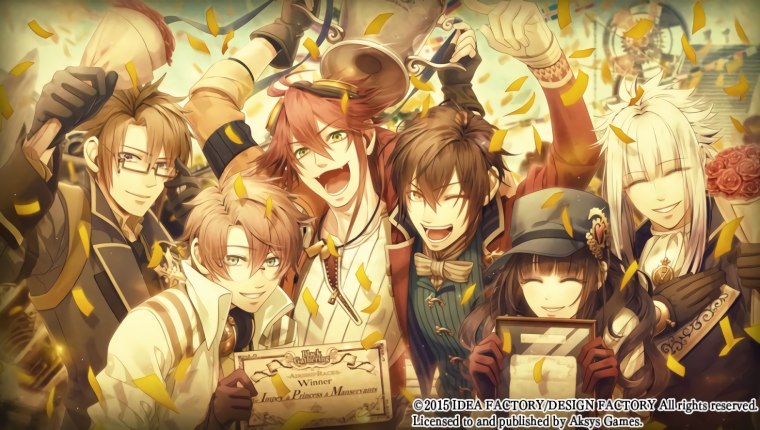
One of the highlights of the game is the absolutely gorgeous art. There is very little to fault the art upon at all. It looks super vibrant and crisp on the PSVita, with a wide assortment of CGs for every character and backgrounds. It also incorporates a bonus extra scene CG that unlocks when you complete their route (a fan-service scenario/picture). If anything, I wish there would be more CGs to look at simply because they’re so beautiful. They look like something that could come out of a painting, and there’s just so much attention and attentiveness to detail.

The proportions and body positions are also done particularly well, a struggle that many Visual Novel artists I’ve noticed have. You could choose to toggle on/off the portrait of the heroine, but I personally liked having it on due to the sprite of the heroine encompassing varying expressions depending on the scenario. I liked how the CGs were distributed evenly with every bachelor, so it didn’t feel like some had more or less than others. The quality of the images are maintained throughout the game, and consistency I find is the most crucial factor when it comes to Visual Novels.

If you want to check out other games that the artist illustrated for, Miko also did the popular Idea Factory games Beast Master and Prince (Moujuutsukai to Ouji-sama) and Bond of Ten Demons (Toki no Kizuna Sekigahara Kitan). The first is only playable in Japanese, and the second has been localised in the form of a mobile game.

Music and Voice Acting ★★★★

The music in Code: Realize was very well done. It had a large assortment of tracks, and the looping was subtle but not incredibly noticeable. They all suited the mood and theme of the game perfectly and had some of my favourite tracks out of any Visual Novel I’ve played. I particularly enjoyed the piano instrumental for the ‘romantic/emotional’ moments, since they definitely contributed to the overall gameplay experience. The voice acting cast was superb as well, with a solid and famous line up.

  • Van Helsing | VA: Suwabe Junichi | 諏訪部 順一 |
    Fate/Stay Night as Archer, YURII!!! On Ice as Victor, Black Butler as Undertaker
  • Viktor Frankenstein | VA: Kakihara Tetsuya | 柿原 徹也 |
    Amnesia: Series as Shin
  • Impey Barbicane | VA: Morikubo Shotaro | 森久保 祥太郎 |
    Hakuoki: Series as Okita Souji, Persona 4 as Yosuke Hanamura, Naruto as Shikamaru Nara

Every voice actor suited their character perfectly, bringing them to life through emulating their lively personalities. One thing I did note from playing the game, was that Lupin’s voice audio was the quietest out of all the characters despite being on the same volume. It took me quite a while to adjust and figure out exactly how to balance all the audios of the voices, in order for them to speak at the same volume. This task proved to be more difficult than I would’ve thought, as I also had to adjust the background music and sound effects to match the voice volume.

System ★★★★★

This slideshow requires JavaScript.

The system user interface (UI) and graphics layout were nicely designed and suited the theme of the game. The recurring motif of ‘clock-work cogs’ was prevalent throughout the game, as a symbol of time being of the essence in curing the heroine as well as the era of technological advancement in London.

I liked the in-built encyclopaedia very much as it gave extra insight into the historical aspect of the game, backing it up with real-life factual information and explaining terms that the average player may not be familiar with. It was a nice touch how the background of the title screen alternates between day and night depending on the time you play the game.

Code: Realize has an option called ‘Path of Genesis’ that unlocks when you complete your first playthrough. This allows you to select which chapter you would like to play from afterwards, and locks you into the character route you desire no matter what choices you make.

It’s a very nifty option especially for first time Visual Novel players playing without a walkthrough, as it allows you to easily get onto your desired bachelor path and experiment with the varying endings of the game. The gallery allows you to replay event CGs without replaying the game again, and the chibi sprites when selecting the extra scene were adorable.

Conclusion

cr_wiki_header

Overall, Code Realize: ~Guardian of Rebirth~ is a very good game. With its interesting storyline, solid characters, beautiful artwork, strong voice acting line up and great execution—there is very little to fault it about. However, Code: Realize may not be for everyone. It employs the niche steampunk genre, has a very slow developing storyline and quite content-heavy for the average player. It is also an otome game, which means the romance plays a pivotal role in the advancement of the plot.

I’ve read many reviews where some readers absolutely loved the game, but others found themselves struggling to finish it due to how much reading was involved in comparison to the action and gameplay.  For me personally, then I loved the game and I highly recommend it.

If you love in-depth storylines, beautiful artwork and otome then this is definitely the game for you. In my opinion, it is without a doubt one of the best localised otome games out there and well worth purchasing a Vita for—especially as majority of English Visual Novel releases are on the platform.

My main qualm about the game was Lupin’s Route. Despite him being my favourite character and thoroughly enjoying the route itself, there were definitely glaring faults about it. As his path is the ‘true ending’ of the game, it essentially resolves all the problems that arose in the previous storylines and answers any remaining questions the player has.

This is great in the sense that we have a ‘wholesome ending’ that doesn’t feel lacking in those respects. However, it leaves a bad taste for readers where Lupin isn’t their favourite character. Because his route is so ‘perfect’ and resolves every problem, it really does render every other character’s path obsolete.

Despite their significant contribution to the overall plot line, the writers intentionally made it so none of them could fully save Cardia. This because only Lupin could have that role as the true character you’re meant to end up with. They purposefully created holes in the other character’s routes, only so Lupin could solve it all in the end. If everyone’s problems could be solved in Lupin’s ending regardless, what was the real point of their routes?

Everyone more or less ends up in the same place as their ending with Cardia in Lupin’s Route, so regardless of whether or not Cardia chooses to end up with them—nothing truly changes. In every story route ending, Cardia’s poison is still a work-in-progress and their life together although happy, isn’t fully resolved. In Lupin’s Route, everyone gets a happy complete ending.

The whole plot revolves around the concept that you need to choose Lupin, you need him in order to find the answers and wish you seek, driving the audience into a corner where you’re essentially forced to like Lupin the most because he gives you the best ending. As a result, Lupin essentially emulates your perfect prince: noble, courageous and with a heart of justice—only working for your sake and for you to attain happiness. He doesn’t change or deviate much from this role or personality, with very little character development overall. Honestly, all the other bachelors were more multi-faceted and had better dimensions to their character.

I was expecting Lupin to have a dark side to him, or something that changed him so dramatically to become the person he is now. I was convinced at one point that he had been an ex-Twilight member, which would explain his stealth skills and escape tactics reminiscent of the elite organisation. It would’ve been such a great angle and made an even better storyline if executed correctly, so you can imagine my disappointment when that wasn’t the case at all.

I mean, how dramatic would it have been upon realising that the organisation after Cardia’s life and her saviour were both one in the same? That this whole entire time rather than saving her out of good will, it was all part of Finis’ master plan to gain her trust? That is just one example of how many possibilities Lupin’s route could’ve had to go from good to great or amazing.

Overall, Idea Factory did an amazing job with the game and Aksys Games really did choose a solid title to localise. Code: Realize ~Guardian of Rebirth~ has undoubtedly been a commercial success, as it’s fan disk sequel Code: Realize ~Future Blessings~ has been announced for localisation and released in 2018.

I believe the fan disk Idea Factory usually releases aren’t as content heavy as the original games, as they’re ‘after-story’ events to appease readers with more romantic stories with their favourite bachelor. I will definitely be reviewing it and playing it myself when the game releases!

Overall Rating: 4.5/5


support-my-work-on-patreon-banner-image-600px

Do you enjoy reading the content of my website? Would you like to help support me in keeping the website up and running, as well as being able to devote more time to reviews and walkthroughs?

Please consider supporting my work on Patreon, as every little bit helps me out so much every month with website hosting costs. I am forever grateful to all my readers and supporters!


Written By Cherry
Men of Yoshiwara: Ohgiya Review

mainimg_07

RELEASE DATE: 2015
PUBLISHER: D3 Publisher & Dogenzaka Lab
PLATFORMS AVAILABLE: Apple iOS/Android/Steam (English)

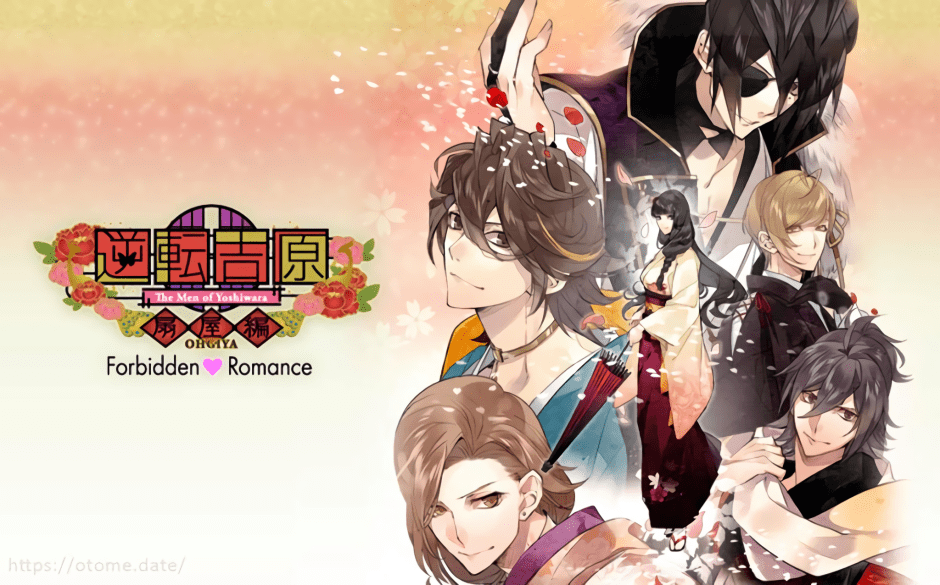
After playing through Men of Yoshiwara: Kikuya, I realised that its popularity allowed the production of a sequel within the same universe of Yoshiwara but using different characters. I was curious about the game, mainly to see whether the game creators addressed the glaringly obvious issues and much needed improvements of the predecessor.

At first glance, the artist had improved significantly in comparison to their debut work. The art looked a lot cleaner, and the character designs were more appealing and less generic. I was excited to play the game as the Yoshiwara universe made for an interesting premise already in the original game, and I preferred the design of the bachelors a lot more in the sequel.

The story also takes upon a different direction with an affluent heroine driven by duty to enter the Pleasure District, rather than the cliche naive, kind-hearted, Cinderella type protagonist who meets the bachelors via fate.

Storyline ★★★★

ss_d12e44cd937d3c5ca128df52523880cbf4a2780e-1920x1080

-The Story-

Deep in the center of an island lies the Yoshiwara pleasure district. Never does its beauty, nor bustling activity, wane in the slightest.

Full of doubt and wonder, which courtesan will you have chosen by the end of a seemingly endless night? (Steam Summary

If you’ve played the predecessor, you will already be very familiar with the Yoshiwara universe and storyline. If you haven’t played the first game, then the setting is based on an island where men are rarely ever born. If a family is ever cursed with the birth of a son, they will eventually be forced to be sold to Yoshiwara, the Pleasure District.

This is for the sake of the island, people and it’s culture, for it is the only method of attaining love (even if it is through the means of one night of deception) or bearing a child. Being a courtesan in Yoshiwara is akin to slavery, as the courtesans are unable to leave the district and their only method of freedom is paying off their debt or being bought by a customer.

Paying off their debt is a feat possible only with the earnings and status of a top courtesan which many aspire to become but never reach. Having one’s freedom bought, only to be inevitably sold to a rich family is merely trading one’s masters and home for another. Even if a courtesan were to find freedom, it would be difficult to survive without a stable source of income, and their talents are rendered obsolete in the world outside of Yoshiwara.

In comparison to the first game where our heroine stumbles into the Pleasure District by coincidence, and certain events occur allowing a pauper to access the top gentlemen (only the rich could ever dream of producing the income needed to spend a night with the best in Yoshiwara); in Ohgiya you play as an affluent protagonist who bears the responsibility of visiting Yoshiwara in order to produce an heir to continue her family business and name.

In all the storylines, she is torn within her inner conflict of desiring the true love she has read about in her studies and novels, and what she must do in order to not disappoint her mother.

She has been raised with love and dutiful care, carrying herself with the poise, dignity and intellect as expected of someone with great lineage. The visitations prove to cause the heroine immense duress, as she is unable to properly respond to the affections of the courtesans and being surrounded by unfamiliar men where she must engage in a purely physical relationship. In turn, all the courtesans of Ohgiya vy for the protagonist’s endearment for reasons such as status for their own career, fame, fortune or perhaps… something more?

The protagonist of Ohgiya has been met with mixed reception in the many reviews I sampled, but I personally thoroughly enjoyed the change of pace and definitely view her as an upgrade to Kikuya. In comparison to Kikuya, where the protagonist is clumsy, naive and innocent to the workings of the world and men; the heroine in Ohgiya is headstrong, intelligent, stays true to her convictions and isn’t so easily swayed by the charms of the courtesans.

Her actions were refreshing; and her source of conflict throughout the routes understandable. Although she knows where her inevitable familial duty lies, and does not wish to disappoint her hard-working mother, she remains cold and apprehensive of the bachelors as she stays true to her own beliefs and sense of self respect.

It is only when she truly falls in love with the courtesans after getting to knowing their own pasts and hardships, does she fully open herself up to them and consummates their relationship. There is actual understandable and noticeable relationship progression, as the characters become closer to one another.

However, I do agree with the notion of other reviews that the heroine’s personality is rather inconsistent in some routes. For example: in Takigawa and Gakuto’s route the protagonist is extremely cold in her approach and refuses to fall in love with them whatsoever; being the top ranked courtesan means they’re extremely skilful in having women fall for their whims and could easily be toying with her feelings. In Asagiri, Utsusumi and Ageha’s routes however although she is on-guard, she is much more reciprocal to their affections.

Although it’s a little confronting to play initially, I feel it’s understandable as the heroine changes in accordance to the bachelor’s personality. Courtesans such as Takigawa and Gakuto are infamous for their trysts with women, and very persistent in their approach to courting the protagonist. The heroine is only more defensive in order to protect herself from getting hurt, and because she is unsure as to how to respond to attention she has never received before.

All the routes differed greatly from one another, another factor that they improved from Kikuya. All the men have different situations or issues that they must overcome in their past, and their struggles in Ohgiya which the protagonist learns about and inevitably falls in love with.

The writing was significantly better than Kikuya as well, the sentence flow and structure had greatly improved, as well as the translation. I’m not sure whether it’s simply because they hired a translator with a better grasp of the english language or whether the original writer had changed/improved from the predecessor but I’m assuming it to be both due to the notable improvements.

The sexual content is as prevalent as the first game (text only — no NSFW images) in terms of description, so that is something to be aware of. Due to the improved writing, I felt the interactions between characters to be more heartwarming and romantic. The climaxes of all the routes were well done, and each of the story’s conclusions brought about a sense of satisfaction at their completion.

Each route is around the same length of 3 hours as the original game despite having less chapters (10 in comparison to 13 total for each bachelor); each chapter is a lot lengthier in terms of content. The game is a lot cheaper than Kikuya at $15.99 compared to $29.99, due to the fact that it does not include the many sub-story scenarios with each of the courtesans. It only comes with the sequel and date scenario for each bachelor, as well as one route less (Kikuya had 6 bachelor stories, Ohgiya has 5). However, I find it to be a much better purchase than Kikuya at full retail price.

Character Development ★★★

! WARNING! SPOILERS AHEAD! READ AT YOUR OWN DISCRETION! 

As I mentioned earlier, the character development improved vastly from Kikuya. There’s actual slow and notable progression in the interactions between characters, and genuine conflict that draws them closer together in understanding and developing their relationship. Each bachelor has their own past and reason for ending up in Ohgiya, which the heroine eventually comes to discover from her visitations. It is these events that coax the protagonist to open up about herself, and realise that their feelings for her are not empty proclamations and her heart can be trusted in their hands.

She is a skilled tailor and business woman in her own right beneath her mother’s tutelage; quickly rising to the problems that occur and doing everything in her power to help the man she loves. One thing that I would’ve liked and many would agree on is a route for Musashi. I personally am very intrigued on his past with the heroine, and his clear underlying feelings and devotion towards her. It would be a refreshing difference from courting someone from the Pleasure District, versus someone the protagonist has known her whole life as a member of her household.

ss_8dc9c20d461ec996099819b1eee1b5840fb9d34d-1920x1080

TAKIGAWA: Takigawa is what I consider to be the canon route of the game, and the most well written out of the bachelors. The protagonist is very apprehensive and hostile initially to him, due to his reputation as the top courtesan of Ohgiya.  She chooses him at Musashi and her mother’s recommendation, due to his experience and status. He is skilled at what he does, although Takao his ultimate rival from Kikuya (the first game) claims that he has “never fallen in love before”, and thus the love he sells is no match for him.

In spite of the main character’s consistent refusal towards his advances, and cruel remarks – he is nothing short of passionate towards the heroine. He openly expresses his desire and sincerity for her time and time again – stopping at nothing to convince her that he is genuine in his feelings towards her. We soon discover that beneath his arrogant facade, is a lonely and traumatic past involving the dark secrets and baggage that comes with reaching the status of top courtesan.

What I liked about the route was that through the heroine’s influence, he was able to confront the demons of his past and turn his life around for the better. It is through each other that they are both able to grow as characters, a slow progression that is evident throughout the story. I consider the route canon due to him being the only bachelor with past history with the protagonist – Takigawa had always been in love with her since childhood, and the game revisits this through a series of flashbacks.

tumblr_od611sIlyl1rzotwxo2_1280.png

GAKUTO: The second most popular courtesan at Ohgiya after Takigawa, and considered the most handsome in terms of appearances by the women of the island. He is rougher and brusque in comparison to the other bachelors, and shrouded in a veil of mystery – never allowing any women to truly come close to him. However, he has his rare moments of gentleness especially to Utsusemi and Ageha that reveal his kind nature, taking the two beneath his wing and tutelage like genuine blood brothers. He considers the heroine interesting at first meeting, and chooses to continue courting her.

As the two grow closer, the protagonist discovers the source of his inner turmoil and torment – that he is an avenger, whose sole life purpose is to seek revenge upon the woman who caused the death of his best friend. His traumatic past forms the crux of his character; and there’s significantly more to him than meets the eye.

His love for the heroine is exceptionally passionate bordering on violent, but ultimately not enough to swerve him from his path of revenge. His route is a lot darker in comparison to the others, but very dynamic as the readers are pulled into the back and forth tide of his indecision between choosing the heroine and revenge.

What I disliked about his route was for majority of it Gakuto was so hell-bent on his revenge, that it seemed as though no matter how hard the heroine tried nothing would get through to him. It felt as though no matter how strongly he claimed he felt about the protagonist, it would never be enough to quench his thirst. So then it brings forth the question: is he truly genuine about the heroine? How can he continue to hurt someone he supposedly cares about, time and time again?

My favourite moment of his route was in Chapter 8, when the heroine threatens to leave him as a last resort to saving him from the path of revenge – and the once proud, unemotional Gakuto completely breaks down and begs the heroine to stay with him. It was a heart-wrenching and touching moment that stood out to me throughout all the routes, and how much he had truly grown as a character.

ss_583f6ea2de6d07d0538eefa981e866b90755b8b6.1920x1080.jpg

ASAGIRI: Asagiri is the most passionate out of all the bachelors, and the most sexually explicit route. He differs from the rest of the men, due to his softer and more seductive demeanour when handling women. Rather than viewing Yoshiwara as a cage he can never escape from, he willingly remains there as he is content with his life as a courtesan. I felt the writing of the dynamic between Asagiri and the heroine were particularly well written in his route, and the sheer ardour and yearning they have for one another is reflected as such.

One thing I disliked was despite his supposed love for the protagonist, upon her breaching the topic of purchasing his freedom for a future together – he vehemently denies her, and becomes angry at her for “denying his way of life”. I found this to be a sudden contrast to the actions he had shown prior, since if he truly loved her wouldn’t he want to always be with her freely? Rather than only within the confinements of Yoshiwara with only very little time together?

Then, when the protagonist finally visits him again after some space for one another, he just magically changes his mind about his previous sentiments? It felt like an all too convenient series of events that didn’t match up with the character’s actions at all.

tumblr_o68a0zvgwy1qd1w54o2_1280

UTSUSEMI: Cheerful, friendly and easily approachable; Utsusemi always wears a cheeky smile on his face. Despite his outward mannerisms that Gakuto always chastises as inappropriate for a courtesan, he is the third most popular at Ohgiya. He is humbled by the heroine’s choice for him as her selected courtesan, as he believes he is no match for Takigawa or Gakuto. In his route, it truly explores the deep friendship between him, Gakuto and Ageha.

Although his path started off very sweet in his patient progression with the protagonist, I found it the most disjointed out of all the routes and difficult to follow. When the heroine doesn’t visit Ohgiya after some time, Utsusemi suddenly has a personality change where he roughly forces himself onto her. I found it to be very abrupt, unwarranted and there was no justification for it.

Also, I could not understand his reasoning for forcing Ageha to take on his identity as his family’s lost son in the mainland, even if it was for the sake of “Ageha’s happiness”. It is not something for Utsusemi to decide, and for someone whom he supposedly is doing for his sake — Ageha was anything but happy, and clearly extremely distraught by the events. Utsusemi then goes on to implore the protagonist to “let him use her as the reason for him to stay here”.

This comes off as very selfish to me, since they’re essentially sacrificing Ageha for the sake of their own happiness, rather than actually doing it for Ageha. Utsusemi to me, never felt truly happy with his choice in the end and only comes off as regretful for his decision.  Although his route started off well, it had very poor execution and story flow.

tumblr_o69q9lbuku1qd1w54o1_1280

AGEHA: The equivalent of Kagerou from Kikuya, Ageha is an apprentice-in-training soon to become a fully fledged courtesan once he completes his deflowering ceremony. He directly serves underneath Gakuto and Utsusemi, whom he deeply respects and admires. Ageha is extremely pure by nature due to his lack of experience with women, and has been sheltered by the other courtesans all his life.

Despite his appearance and mannerisms, he is the same age as the protagonist. If you’re looking for a pure love with plenty of crying from both parties, and many overly sweet moments then this is the route you’re after. He is an ideal match for the heroine, as she feels his honest nature can be trusted compared to the deceitful nature of experienced courtesans. It is a very pure love story, with both parties going to great lengths in order to be with one another.

His route didn’t stand out to me as much as the others, since I felt their love didn’t have as strong of a foundation as the other courtesans and his character changed very little over the course of the story. It also had too much crying for my taste, and petty misunderstandings. The events that led to the climax of his story were also far too convenient and all of a sudden they’re able to be together. It didn’t truly feel like they had fought to be together, nor the fruits of their labor had come to fruition at all, which was disappointing.

Design ★★★★

Similar to Kikuya, the major selling point of the game is the beautiful art, backgrounds and sprites. I felt that the body proportions were improved in comparison to the first game, such as the hand structure which I criticised in Kikuya. The background art especially improved, and I did not mind that some were reused as the resolution was increased to match the new art style. The line art and colour illustration was significantly cleaner, and there was less of a disparity between the character sprite and CG.

The character clothing and hairstyles were drawn with more attentiveness, and I loved the kimonos of the courtesans in Ohgiya a lot more than the original. I found them to be drawn a little bulky at times, but I suppose it’s to demonstrate the traditional style of the kimonos they’re wearing (as Kikuya is meant to be a ‘modernised brothel’). I especially loved the new protagonist’s character design, and hair. Overall, I felt the quality of illustration was maintained and improved in all of the CGs.

One of my main criticisms would be the use of the old character sprites from Kikuya, as the characters from the original game do make cameo appearances in Ohgiya. Due to the improvements and different art style between the predecessor and sequel, it is blatantly obvious when the character sprites are side by side. It feels as though they clearly do not belong in the same game, and I find that to be poor production value.

ss_5a93903fe16587ef0eb0339233690e82cf0d1b7a.1920x1080.jpg

Music and Voice Acting ★★

Although the music tracks have improved in Ohgiya compared to Kikuya, it still suffers the same glaringly obvious issues as the predecessor. They used only a handful of 30s looping tracks that became repetitive over the course of the game, and the loops were very choppy and poorly done. You can hear the exact section of the song where it loops back to the beginning. The songs did better suit the mood of the game, and were more mellow and pleasing on the ears to listen to in comparison to Kikuya. However, they really weren’t anything special to write home about and there was no voice acting in any of the platform ports.

System ★★★

As the game initially was also a mobile platform port, the UI wasn’t particularly impressive or attentive to detail. The controls and ease of use felt rather clunky on the steam version, and not completely smooth for the user. However, it is an improvement over the hot purple/pink colour scheme of Kikuya, using rich tones of gold and red.

It more or less features the same basic functions as the original, with character introductions, access to gallery, backlog and the same six load/save files which honestly is not enough for a game of this length. At the very least what they did change is when you open full screen mode in Ohgiya, it does not turn completely pixellated and has good resolution; an issue that really should not have been in Kikuya at all.

This slideshow requires JavaScript.

Conclusion

Overall, Men of Yoshiwara: Ohgiya is a good game and I enjoyed it a lot more than its predecessor, Kikuya. It has a stronger cast line up of bachelors, each with distinct personalities and better written storylines. There are plenty of noteworthy moments in all the bachelor stories, even though the author was unable to hold the momentum all the way to the end of the routes such as Utsusemi and Ageha.

Although the writing has improved vastly to Kikuya, as a standalone title it is still quite poor and could use a lot of improvement. There is still a fair amount of grammatical errors, typos, and sentence cut offs that are noticeable in all the stories. However, it is easier to overlook than the amount that I found in Kikuya.

Although the stories had better cohesion, build up and development; some of the lead up events to the happy end felt very abrupt, forced or sudden. Convenient plot devices would occur to wrap the story outcome into a sudden happy ending. It disrupted the flow of the story, and although the ends are satisfying in terms of the characters ending up together; it could have been executed much better. The happy endings honestly felt tacked on, without too much connection to the events that happened prior, especially for the normal ends. It felt like a backtrack to all the bachelor’s actions in the route.

I thoroughly enjoyed Takigawa and Gakuto’s route, and they definitely fulfilled my expectations as the two main bachelors and poster-men of the game. I find that $15.99 USD is a fair price for the game, despite the lack of sub-stories. You would expect to complete the game in about 10-20 hrs of gameplay, and with the art and improved content you’re receiving it is a decent purchase (not to mention it does go on sale on steam once in a while). That being said, I do recommend purchasing the game on sale as it’s not rare that this occurs, and just more bang for your buck right?

I am fairly satisfied as the game has improved a lot as a later title of Dogenzaka Lab, addressed a lot of the shortcomings in Kikuya and will continue to improve in future. My main qualm with their games is to invest in better translations, improved UI for cross platform ports, and to perhaps incorporate voice acting. Many of the Visual Novels released and to-be-released on steam are all very popular and highly praised games from initial release, and it is rare for them not to have voice acting. If Dogenzaka Lab hopes to compete with them, then it would be a major step forward in improving their games.

Overall Rating: 3/5

Written By Cherry

Men of Yoshiwara: Kikuya Review

mainimg_02
RELEASE DATE
: 2014
PUBLISHER: D3 Publisher & Dogenzaka Lab
PLATFORMS AVAILABLE: Apple iOS/Android/Steam (English), PSVITA (Japanese)

I recently picked up the game a few weeks back during Steam’s December/Winter Sale. It was 75% off the original price of $29.99USD, which is quite a good steal in my opinion. What initially attracted me was the lovely art, and its setting within ancient Japan/the Edo Period. I have a soft spot for the time period due to its depictions of ancient Japanese culture, and there are vast windows of opportunity for interesting storylines interwoven with the complexity of history. I especially adore characters adorning kimonos as they are always drawn so beautifully, as well as the intricate background arts to reflect the era.

The use and popularity of the genre within visual novels have increased immensely after Idea Factory’s now coveted poster game Hakuouki: Demon of the Fleeting Blossom made its huge splash with both its original debut in Japan and expansion to western culture through the licensing partnership with Akyss Games. Game companies are always seeking new target markets to appeal to, and whatever is popular clearly sells, right?

I was aware that the game originally was released for the mobile platform, but after its notable popularity it garnered enough of a following to warrant a steam release as well as it’s sequel – Men of Yoshiwara: Ohgiya (which I also reviewed). I was intrigued on how they decided to approach the steam port, in terms of graphics, improvements, art, UI etc. and was met with mixed reception.

Storyline ★★★

ss_b033ed95dc424ea8a752c6133a340756c37dddfc-1920x1080

– The Story –
A closed island where baby boys are not born…
A unique culture that is completely different from the mainland has been flourishing on the island. In the middle of the island, there is a district where men are gathered.
Some women just want children.
Others are looking for love.
Knowingly deceived by a lie, and deceived in return, all in a single night’s dream.
At the end, to whom is it that you will be talking of love? (Steam Summary)

You play as the daughter of a regular shipping agent, and have lived a relatively sheltered life on an island where men are rarely ever conceived. Any men who are born are cursed to being inevitably sold to Yoshiwara, in order to become a courtesan. As a result, the only choice for the women of the island to experience any semblance of love or to have children is to pay a visit to the district of Yoshiwara. It is a custom exclusive only to this unique island, where it has become an everyday occurrence when a woman comes of age to visit the pleasure district.

Yoshiwara despite its awe-inspiring beauty, is merely a fabricated dream. The male courtesans are enforced to something akin to slavery – they sell their body and love, but never their hearts. Our protagonist on an errand to Yoshiwara, stumbles across a courtesan and his lover attempting to escape to the mainland in order to be together. Assisting such a crime would be considered high treason, but the MC follows her heart and allows them to find a boat in order to escape. In return for her kindness, she is given a large sum of money and a kimono of great quality.

She continues on her errand with the package in hand, and is dragged into the depths of the pleasure district where she meets our bachelors and experiences emotions and events she never would have dreamed of or been possible without the blessing of the couple she rescued. What would become of our innocent heroine who has never experienced the darkness of the island, and will she fall into a world of deceit and fabricated dreams?

Although the premise was promising, it had very mediocre execution. The events were extremely predictable, with the heroine quickly falling to the beguiling charms of the gentlemen. The courtesans in turn fall for the protagonist without any proper build up or emotional connection, but merely on the premise that she is “cute and innocent”. The writing was littered with grammatical errors, spelling mistakes and a lot of the phrases were worded quite strangely.

The flow of the writing was disjointed and clunky, and clearly translated by someone where english is not their first language. The stories tended to wrap up through very convenient methods without much explanation, and the heroine ended up with all the male courtesans through more or less the same ways (courtesan pays off debt or gets bought, they get married, the end).

For several different character routes, variety and variation is a must in the writing of the story. Overall, if you overlook the subpar writing and poor execution the story does have some good moments here and there of promise. There were a few scenes that definitely warmed my heart, in the climaxes of the story when the protagonist and the male bachelor confide in their love for one another and the culmination of their relationship. It does contain fairly descriptive sexual content compared to most otome games, so that is something to also keep in mind. Each route takes about 3hrs to complete (with the side stories, sequel and date scenario).

Character Development ★★★

! WARNING! SPOILERS AHEAD! READ AT YOUR OWN DISCRETION! 

In general, I found the character development to be very lacking in this game. Most of the bachelors hardly change throughout the story, and more or less remain the same. They’re a little softer in their approach to the heroine, and more open in confiding their love – but as a reader you’d expect something more than that after everything they have been through together.

The heroine especially, completely lacks character and is the equivalent to a doormat. She cries a lot, and for the most part essentially over nothing. She quickly falls for the guys, and is willing to throw everything on the line for them after only a few encounters which for the life of me I cannot begin to wrap my head around. I suppose her only good point is she doesn’t lack passion and is willing to protect at all costs what she holds dear. She is easy to read like an open book, very kindhearted and hardworking due to her sheltered upbringing.

ss_e0cefdfae70eebbad4fdcea10d8fe5a969975a75-1920x1080

TAKAO: One of the most popular courtesans in all of Yoshiwara, he excels in charming women with his sweet words, alluring demeanour and charming nature. Due to this, he is extremely egocentric and approaches everything in a very confident manner. The heroine is bewitched by his looks at first glance, and quickly succumbs to him — visiting him at every opportunity, constantly waiting for him at Kikuya (the more popular a courtesan; the longer his list of customers he must attend to) and finds herself unable to focus when she is apart from him.

What I disliked about the route was that Takao remained the same from beginning to end, and his personality had very little development over the course of the story. His feelings for the heroine were also abrupt and sudden, and without much relationship build up.

I found Takao a lot more likeable in the other character routes, as he is prevalent in all their storylines. His story was also tied up in the most convenient plot device possible, and I disliked how they didn’t properly explore his relationship with his father further; despite their heartfelt reunion. It felt like it all happened so fast, and then it skipped to their wedding and then “the end”. It had so much potential to give Takao the depth he needed as a character, because ultimately his family was his reason for continuing to remain in Yoshiwara for so long. For the poster boy of the game, I expected a lot more from his route.

download-1

KAGURA: I felt the pacing in Kagura’s route to be a lot better than Takao’s. The pacing was significantly slower in terms of romantic interactions (for Takao’s he is very forward from the get-go), but it made for a more meaningful relationship. Kagura is a very serious individual, and very different from the other courtesans. He wishes to be recognised for his abilities in swordsmanship and knowledge of western culture rather than his looks alone. He is hardworking, and not a man of many words.

As a result the heroine desires to know more about him and what he likes, and their interactions mainly consist of conversations in getting to know one another. I found the MC to be more endearing in this route, as she tries her best to get to know Kagura, his interests, and shows more attentiveness to him. My only criticism would be again, that his story ties up in the most convenient way possible before it quickly skips to their wedding and the ending of the story.

otoko-yuukaku-2015-02-12-14

KAGEROU: My personal favourite route of the game. He is Kagura’s attendant, and a courtesan-in-training soon to have his coming of age debut. As a result, he is unfamiliar with women and love and has a sharp-tongue when speaking. He is the same age as the heroine, and thus their relationship begins on a more even playing field. Both are able to open up to one another more, as their similar age makes conversing a lot easier.

The heroine is not intimidated by Kagerou (in comparison to the other bachelors) and is able to show a lot more of her true personality. They often engage in friendly, endearing banter and it is clear through their interactions with one another the continual shift in their relationship. Kagerou idolises Kagura and as a result it is rare for him to interact with anyone else. It is clear when Kagerou falls for the heroine, by asking her to accompany him on a date to the local festival.

His route was like a breath of fresh air, as he wasn’t stifled in confinement. Kagerou has yet to become a fully-fledged courtesan, and is still allowed outside of Yoshiwara to pursue his studies. He truly changes when falling in love with the heroine, and pushes everything aside when she falls ill; showing his immense love for her. I personally find their route to be the most canon, as they are able to consummate their love as one another’s firsts and with someone they truly love; something rare and unheard of in Yoshiwara.

otoko-yuukaku-2015-02-12-12

TOKIWA: He comes off as very rude and arrogant in majority of the other routes, so to my surprise he was actually one of the more gentle characters out of the courtesans. Tokiwa prior to his demotion to Takao’s attendant, was a rising courtesan within the district for his skills in dance, singing and unique foreign looks. In comparison to the other men of Yoshiwara, he originated from the mainland and was not originally born on the island itself.

He did not come onto the protagonist as strongly compared to his appearances in other routes, where he consistently attempted to seduce her and has a bad reputation for stealing other gentlemen’s clients (which is considered forbidden in Yoshiwara; as a client may only choose to remain with one courtesan once chosen).

I quite liked the pacing of their relationship, since I felt they developed quite mutually. He learns to accept himself for the things that he despises, due to the heroine’s love for him. I felt in this route the protagonist truly wanted to make him happy, and paved the path for him to achieving his dream as the most desired and top courtesan in Yoshiwara. My main criticism would be the story tied up through a very convenient series of events that enabled them to be together and ended in marriage.

iroha5_zpso5jkwzoo.png

IROHA: The now retired-courtesan and current “ogre-like” manager of Kikuya, he is the main contribution to its success within Yoshiwara. He is always thinking of the business first and foremost, using whatever means necessary in ensuring it prospers as the most popular courtesan shop. His route is very different in comparison to the others, as he is no longer working as a courtesan. As such, he insists to the heroine that there is no need to pay for his services, as he is no longer a gentlemen of the night.

Although he is always employing tactics that would be most profitable for the store, it is clear in the other routes that he is not completely as heartless as his actions would infer. He clearly does care for the other courtesans very much, and wishes them happiness. Due to his position, he keeps a clear barrier between him and the heroine; refusing her wishes and advances for a more intimate relationship.

We soon learn that it is due to him holding a dark secret, and a strong sense of debt towards Kikuya. When he falls for the heroine, he becomes very passionate and extremely jealous; unlike his normally cool and collected self. I quite enjoyed his route, as the complication was different from the other courtesans. He is not bound to the store in the same manner, and their source of conflict results from his dark secret. I found his transformation a little overbearing however, since he went literally 180 degrees towards the heroine from dismissive to completely obsessed in an instant.

1

HAYABUSA: The only courtesan with prior history with the heroine, and her dear childhood friend. Unlike the others who use their beguiling charms and physical attractiveness in earning customers, women are attracted to Hayabusa due to his hardworking and caring nature. He gets along with the other courtesans of Kikuya well, especially Takao in spite of Takao having stiff relations with the others due to his popularity as a courtesan and abrasive nature.

What I liked about this route was it was interwoven with flashbacks of their past, and the nostalgic nature of their conversations. It demonstrated how much they truly cared for one another, and how their feelings had not diminished despite the time they had spent apart. Hayabusa has always been in love with the heroine, and only thought of her; collecting her favourite candy in the hopes that if they were to be reunited, he would be able to offer them to her as a gift. I found that to be so adorable, and a testament of his longstanding love.

Overall, the route is a lot fluffier than the others but I found myself again being disappointed by the ending. He easily escapes jail with the help of the heroine’s mother as the patrol guard had previously been in her debt and he is subsequently released. It then quickly skips to their wedding scene and ending. He also has less content in comparison to the other men, as he was the newer add-on route implemented in the game (and thus, does not appear at all in the other male routes). Whilst the other characters have plenty of sub-stories, there aren’t any for Hayabusa I believe.

Design ★★★

One of the biggest selling points of the game is its great art, especially for something being originally for a mobile platform. It has a wide array of backgrounds, and the character designs with their unique kimonos are all drawn beautifully. I love the colour scheme and art style of the artist. If I were to be nitpicky, then I felt that the CGs of the game were of lower quality than the drawn character sprites. The line art just wasn’t as clean or crisp, and the artist clearly had trouble with certain expressions or hand gestures (something that is quite common in visual novels).

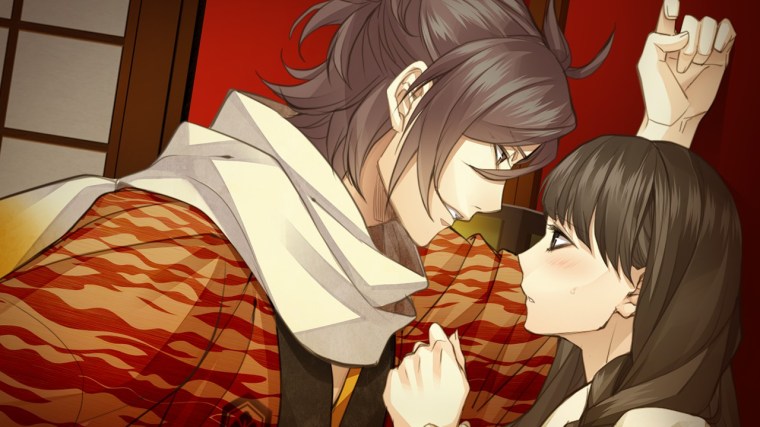
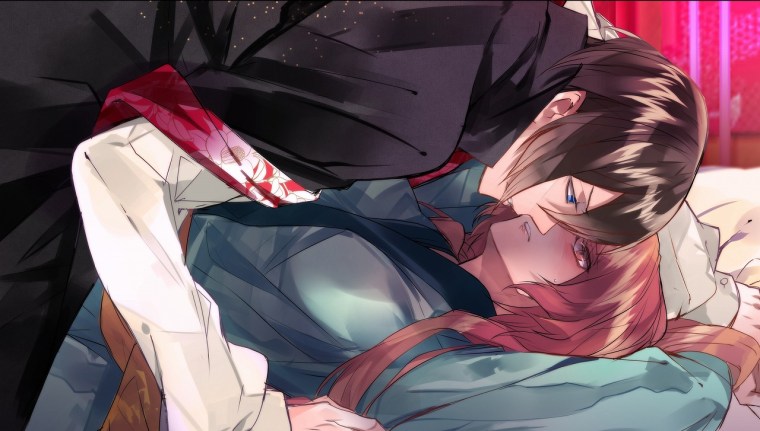
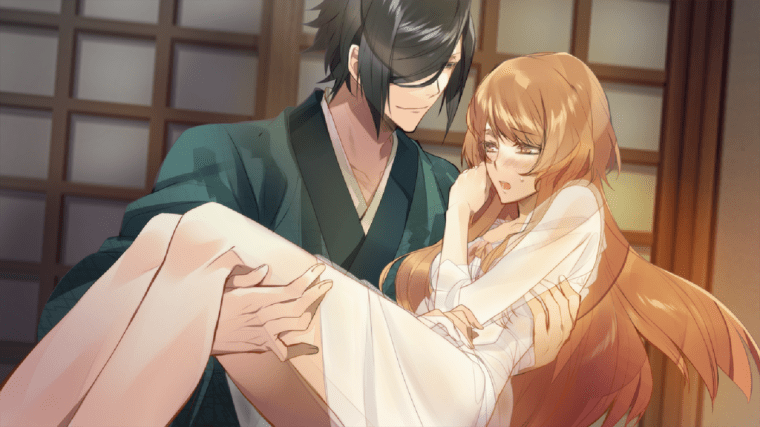
For example: in the two images below, in the first image with Iroha both of the character’s hands are very oddly proportioned. His hands are clutching her face like a vice, and larger than her head; whilst the heroine’s hands look akin to being fractured and claw-like. In the second image with Kagerou, what is clearly an attempt at looking seductive comes across as someone who looks completely different. It doesn’t look at all like his character sprite, and looks more like an evil expression in a bad ending route.

33kagerou1_zpsdbj15kdf

Music and Voice Acting ★★

As it is a mobile platform game, the music wasn’t anything great. Most mobile platform visual novels often utilise only a handful of 30 second tracks that consistently loop over the course of the game. The looping in this game however, was done quite poorly and choppy. You can hear exactly when the sound loops for it stops abruptly and changes back to the beginning of the track. The songs chosen however, were suitable to the mood and scenes of the game.

As the steam was ported from the mobile version, there was no voice acting. This to me is quite disappointing, as for the PSVITA port it included voice acting from famous seiyuus from the Tokimeki Memorial series and I believe Takao is voiced by Morikubo Shoutarou who famously voices Okita Souji from Hakuoki: Demon of the Fleeting Blossom, Impey Barbicane from Code Realize: Guardian of Rebirth, Hanamura Yosuke from Persona 4 and Shikamaru Nara from Naruto.

System ★★

The system, user interface (UI) and overall graphic layout isn’t really anything to write home about. As it is a mobile port, it uses the exact same UI that you would see on your mobile phone. One major complaint I had was even though you have the option to play the game on windowed mode or full screen for steam, if you chose full screen; the game would become incredibly pixellated and unclear as it was not programmed for the larger resolution of a PC screen.

This shows incredible lack of foresight by the company, and is quite sloppy in my opinion. The textual interface is bland, and the glaring tones of pink and purple aren’t very appealing to look at. Six save slots is too little for a steam port, and the overall ease of use for the interface such as accessing the backlog/save file loads didn’t feel crisp at all.

This slideshow requires JavaScript.

Conclusion

Overall, the game wasn’t too bad. Nothing outstanding to write home about, but not terrible either. It is Dogenzaka Lab’s most popular title for a reason, as the game did span multiple ports and a sequel using the same setting with different characters. It had some good moments here and there, and glimpses of greater potential that were not executed properly. One of my major qualms about the game was the poor writing and translations that are difficult to overlook for a $29.99USD game. I can think of numerous titles off the top of my head of the same price, but with infinitely better quality writing, plot, character and execution.

I also do not understand why Dogenzaka Lab did not import the PSVITA version to steam instead. It included professional voice acting, improved UI, graphics (cleaned/fixed the old CGs), new CGs, additional events and scenes. Hayabusa is not an included character to play, but they have a PSVITA exclusive bachelor called Itou Keiji for selection instead. Unfortunately, the PSVITA port is still in japanese without an english release so the only way to access the game is via purchasing it in the Japan PSN store.

I personally would not recommend purchasing the game for full price at all. In terms of price value however, then the steam version is significantly better than the mobile platform. Purchasing it via mobile means you pay-per-character, and all the extra content must be purchased individually as well. The steam version includes all character routes, sequel, date scenario and several sub-stories for each bachelor.

I would only recommend purchasing the game on sale, and it goes on sale once every couple of months from what I have observed. For the price of $7.50USD (75% off), it does offer a decent amount of gameplay that I feel is worthwhile. With around 3hr routes per character (including extra content), you would expect to complete the game in about 10-20hrs depending on your reading speed.

I thoroughly enjoyed Kagerou’s route, and it was definitely my favourite of the game. If you can overlook the grammatical errors and typos in the game and are looking for a more steamier otome game with good art, then I recommend purchasing this one on sale. I look forward to playing the sequel Men of Yoshiwara: Ohgiya and seeing whether or not the developers have improved their shortcomings of the first title. I will be posting it up next, so look forward to reading it!

Overall Rating: 2.5/5

Written By Cherry